VISION
To become a leading, independent, non-public science, technology, and innovation organization in Southeast Asia—pioneering and trusted—serving as a bridge connecting knowledge, technology, and policy to promote smart, adaptive, and sustainable water resource governance.
MISSION
To generate momentum for knowledge, technology, and innovative solutions to support the government, local authorities, and communities in improving water resource governance, enhancing climate resilience, and promoting sustainable development.
POSITIONING MESSAGE
The Institute is an independent, flexible, and innovative scientific institution that contributes to transforming the paradigm from “water resource management” to “smart water system governance” in the context of climate change and global integration.
STRATEGIC VALUE STATEMENT
The Institute exists to bridge the gap between science and policy, between data and decision-making, and between ideas and action.
We do not only study water—we shape how Vietnam understands, governs, and protects its water resources for the future, aiming toward socio-economic development goals with culture at the center and science and technology as key drivers.
FUNCTIONS AND DUTIES
The Southeast Asia Institute of Water Resources and Environment (SAIWARE) is a non-public science and technology organization under the Vietnam Union of Science and Technology Associations (VUSTA), established in 2007. The Institute was granted an updated Science and Technology Operation Registration Certificate No. A-634 by the Ministry of Science and Technology on September 20, 2024.
Functions:
To bring together scientists and experts with dedication and experience to conduct research and apply science and technology; provide consultancy and technology transfer; deliver science and technology services in agriculture, irrigation, hydropower, water resources, pollution treatment, and sustainable environmental development; implement capacity-building, training, and community development activities contributing to national socio-economic development.
Duties:
– Research mechanisms and policies for smart water resource governance adapted to climate change and environmental protection.
– Conduct R&D and implement programs, projects, and studies on efficient water resource utilization, multi-purpose irrigation systems; improve institutional frameworks and governance models linked with ecological agriculture; develop reservoir operation procedures for multi-functional use.
– Research and apply technologies in irrigation, hydropower, river engineering, water treatment, and environmental protection; forecast water resources, droughts, salinity intrusion; support disaster risk reduction and climate change adaptation.
– Train human resources and transfer scientific and technical advances in irrigation, hydropower, water resource use, environmental treatment, and rural infrastructure development.
– Provide consultancy, appraisal, and evaluation of irrigation, hydropower, and water resource projects; environmental impact assessments; and commercialization of research outputs.
- Collaborate with domestic and international organizations and individuals in accordance with legal regulations and VUSTA guidelines.
STRATEGIC DEVELOPMENT TASKS (2025–2035)
- Research scientific and practical foundations to support institutional and policy development for effective governance, risk management, and water security.
- Develop smart water governance policies adapted to climate change and environmental protection.
- Address urgent challenges in water resource governance, irrigation, and environment, including water security, ecosystem conservation, and sustainable livelihoods.
- Apply green and advanced technologies in water resource management, forecasting, and smart irrigation systems.
- Engage interdisciplinary and regional experts to address systemic issues in water management.
- Partner with enterprises to transfer technologies and innovations in water supply, irrigation, sanitation, and rural infrastructure.
- Collaborate with international organizations and regional water associations in Southeast Asia.
ORGANIZATIONAL STRUCTURE

Organizational structure of the Southeast Asia Institute of Water Resources and Environment
List of Senior Advisory Board Members:
- Prof. Dr. Mai Trong Nhuan – Former Director of Vietnam National University, Hanoi; Chairman of the Vietnam Geochemical Association (Chairman of the Board);
- Prof. Dr. Tran Dinh Hoa – Director of Vietnam Academy for Water Resources;
- Prof. Dr. Tran Thuc – Former Director of the Institute of Meteorology, Hydrology and Climate Change;
- Prof. Dr. Le Sam – Former Director of Southern Institute of Water Resources Research;
- Assoc. Prof. Dr. Dao The Anh – Former Deputy Director of Vietnam Academy of Agricultural Sciences;
- Prof. Dr. Bui Quang Dung – Former Director of Institute of Sociology;
- Prof. Dr. Trinh Minh Thu – Former Rector of Thuy Loi University;
- Prof. Dr. Nguyen Vu Viet – Former Director of Vietnam Academy for Water Resources;
- Assoc. Prof. Dr. Ha Luong Thuan – Former Director of Institute of Water, Irrigation and Environment;
- Dr. Bach Quoc Khang – Former Director General of Agro-processing Department;
- Dr. Lee Jeong Hyop – Senior advisor for Southeast Asia socio-economic development;
- Prof. Kuo Sheng Feng – Senior advisor on smart water management from Taiwan.
Specialized Experts:
- Assoc. Prof. Dr. Nguyen Van Tuan – Expert in water resource planning;
- Assoc. Prof. Dr. Le Quynh Chi – Urban planning expert;
- Assoc. Prof. Dr. Ha Hai Duong – Climate change expert;
- Dr. Dang Thi Viet Phuong – Sociology expert;
- Dr. Tran Van Dat – Water economics and digital transformation expert;
- MSc. Nguyen Viet Ha – Crop science expert;
- Dr. Nguyen Xuan Lam – Water engineering and IoT expert.
Management and Scientific Councils:
Management Council consists of 7 members:
– Chairman: Prof. Dr. Nguyen Tuan Anh;
– Vice Chairman: MSc. Vu Trong Ha;
Scientific Council includes leading scientists and experts:
– Chairman: Prof. Dr. Nguyen Van Tinh;
– Vice Chairman: Assoc. Prof. Dr. Doan Doan Tuan.
Partners and Collaborators:
The Institute collaborates with multiple science and technology organizations and continues expanding partnerships domestically and internationally.
Administration and Planning Department:
– MSc. Ha Thi Hao, Eng. Phan Huu Hoa, and BA Nguyen Quynh Anh.
SCIENTIFIC AND TECHNOLOGICAL ACHIEVEMENTS
The Institute has implemented over 40 science and technology projects, including 5 national-level research programs.
Key Achievements (Last 5 Years):
- Smart irrigation technologies for water security and ecological agriculture (2025–2027)
- Improvement solutions for Cai Lon – Cai Be irrigation system (2024–2026)
- Water governance and livelihood studies in Mekong Delta (2024–2026)
- Consulting on Mekong Delta S&T alliance (2025)
- UNDP water user group project (2024–2026)
- ADB flood risk management consulting (2024–2025)
- GEF-ICRSL livelihood and data projects (2022–2023)
- Water quality improvement in Nhue–Day basin (2020–2021)
- Climate vulnerability assessment projects (2019–2020)
TRAINING AND INTERNATIONAL COOPERATION
- Training: The Institute participates in postgraduate education and supervision.
- International Cooperation:
- Collaboration with AERC Taiwan on smart irrigation models;
- Cooperation with UEH and UNOPS on mangrove livelihood project (2025–2026).
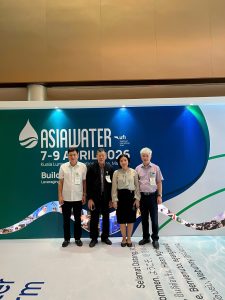
- International Conferences: Organized with Informa Markets on water resource management (2024–2025).

Tiếng Việt