
 Tiếng Việt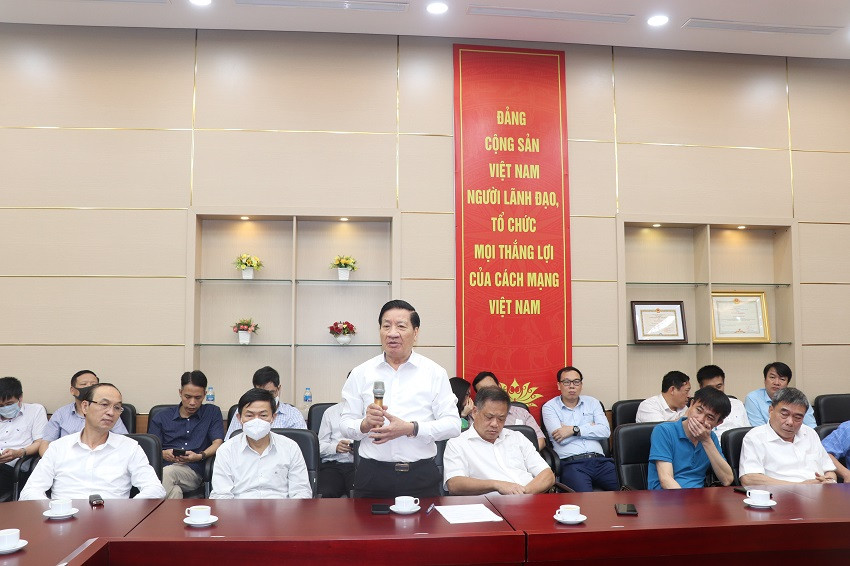
Dr. Bach Tan Sinh – Southeast Asia Water Resources and Environment Institute; M.Sc. Phi Cong Thuong – Ministry of Science and Technology
02 July 2026
In the context of water resources facing mounting challenges from climate change, pollution, and digital transformation, renewing research thinking has become an urgent requirement. The journey of Prof. Dr. Nguyen Tuan Anh and his colleagues demonstrates a shift from traditional research toward smart water governance, integrating data and technology to advance sustainable development.
As the water sector faces new challenges
In recent years, water resources have become one of Viet Nam’s most important development issues.
From pollution in river basins, the decline of groundwater sources, drought, and saltwater intrusion in the Mekong Delta, to the demand for digital transformation in resource and environmental management, all these developments show that traditional approaches are now confronting new challenges.
Prof. Dr. Nguyen Tuan Anh speaking at a conference organized by the Vietnam Institute of Water Resources.
Against this backdrop, many scientists have been searching for new directions for the water sector.
Prof. Dr. Nguyen Tuan Anh is among those who early on promoted a shift in thinking from specialized research to an integrated approach, and from water resources management to smart water governance based on data and digital technology.
Notably, the contributions of him and his colleagues have not only been reflected in research works, but also in shaping a new approach to water resources science in Viet Nam.
A new mindset: water is not only a technical issue
For many years, water-sector research focused mainly on technical matters such as hydrology, irrigation, water supply and drainage, and environmental treatment. This approach has delivered many important achievements, but as water-related issues have grown more complex, standalone technical solutions are no longer sufficient.
One of the most impressive aspects of Prof. Dr. Nguyen Tuan Anh is the way he has consistently framed issues on a broader scale. In his view, water is not only a natural resource, but also a matter linked to the economy, society, environment, technology, institutions, governance, and, in recent years, culture.
From that perspective, many of his and his colleagues’ studies have turned to new themes such as river basin governance, water security, recovery of degraded water systems, digital transformation in the water sector, climate-adaptive governance, and circular economy in the water domain.
This represents an important shift in thinking from addressing individual problems in isolation to viewing water as an integrated system.
Digital data – the foundation of modern water governance
Perhaps the clearest mark in the research directions of Prof. Dr. Nguyen Tuan Anh and his colleagues is their emphasis on the role of data.
Long before digital transformation became a widely discussed topic, he had already highlighted the need to build water-sector databases, connect data among management agencies, and apply digital technologies to water resources monitoring.
In his view, without reliable data, effective management decisions are difficult to make. Data not only helps us understand the current situation, but also supports forecasting, risk assessment, and the selection of appropriate response options.
This thinking has paved the way for numerous studies on geographic information systems and digital technical mapping of water resources, decision support systems, artificial intelligence, the Internet of Things, and digital twins in water resources management.
Today, many ideas once considered innovative are gradually becoming mainstream development trends in the global water sector.
From research to policy and practice
Another noteworthy aspect is the ability to connect research with management practice.
Many scientific studies stop at reports or specialized publications. By contrast, initiatives promoted by Prof. Dr. Nguyen Tuan Anh and his colleagues have often aimed to support local authorities, enterprises, and management agencies in addressing concrete issues.
From research on recovering degraded water sources, river basin governance, to digital transformation in the water sector, the common thread has been the pursuit of practical value.
This also contributes to the formation of a collaboration model among scientists, managers, businesspeople, and communities.
Such a model is increasingly seen as necessary in a context where environmental and resource issues are becoming more complex.
Lessons that can be shared
Looking at the research journey and renewal of thinking led by Prof. Dr. Nguyen Tuan Anh and his colleagues, several notable lessons can be drawn:
First, scientific research must move one step ahead in identifying new social and technological trends.
Second, major water resources challenges cannot be solved by a single discipline alone, but require the combination of multiple fields.
Third, digital data is becoming a resource no less important than water resources themselves. The ability to collect, share, and exploit data will determine the quality of governance in the future.
Fourth, the value of research lies not only in scientific publications, but also in its capacity to be translated into policy, technology, and practical solutions.
In conclusion
As Viet Nam moves toward green development, a circular economy, and national digital transformation, innovative thinking in water resources research is becoming increasingly important.
The experience from the research journey of Prof. Dr. Nguyen Tuan Anh and his colleagues shows that innovation comes not only from technology, but first and foremost from a change in how problems are perceived. From management to governance, from specialization to interdisciplinarity, from fragmented data to connected data—that may be the key transitions helping Viet Nam’s water sector move closer to the goal of smart, adaptive, and sustainable governance in the future./.
